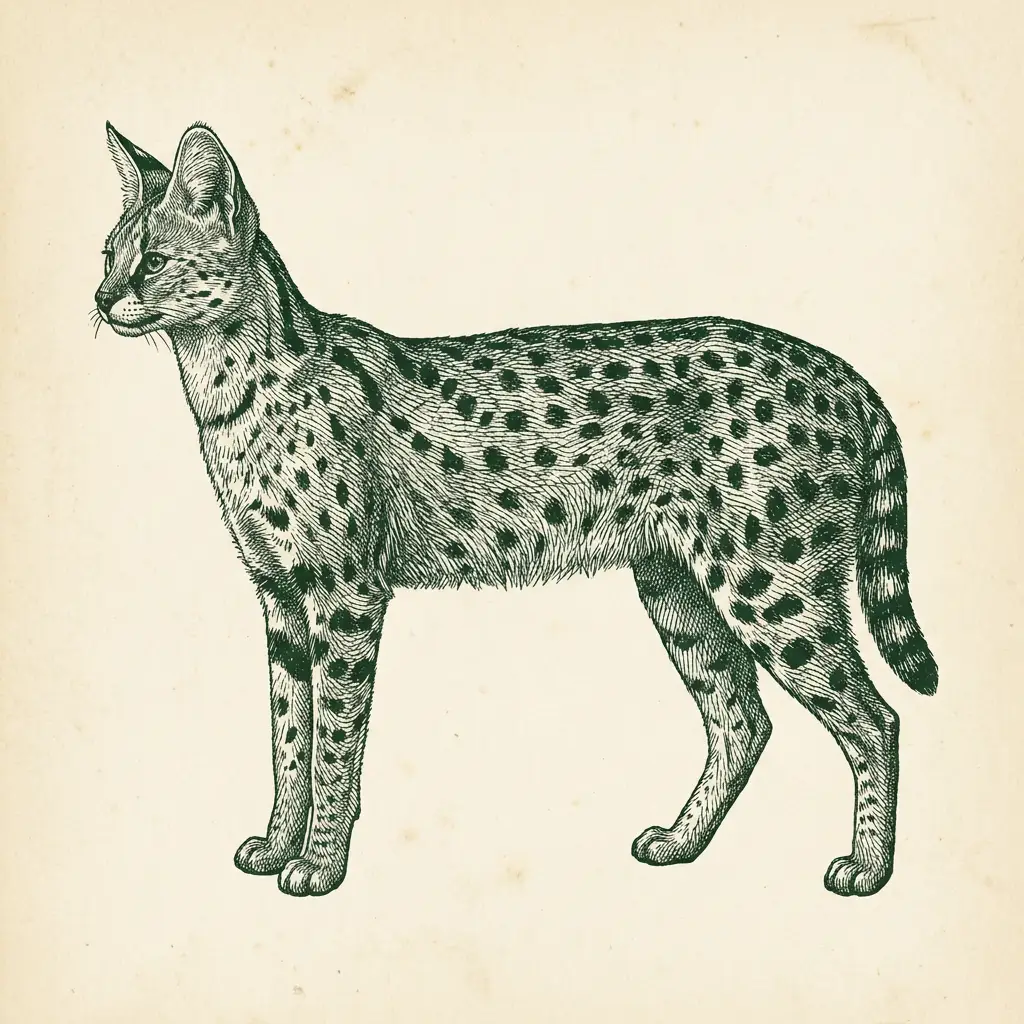
Is it legal to own a serval in Kansas?
The short answer
Yes. Kansas's dangerous regulated animal statute names lions, tigers, leopards, jaguars, cheetahs, and mountain lions - servals are conspicuously absent from the list. As non-native exotic wildlife, a legally sourced serval may be possessed without a KDWP permit under K.A.R. 115-20-3. It must be confined at all times and never released.
What Kansas law says
KSA 32-1301 restricts only the six named big cats (plus bears and non-native venomous snakes); K.A.R. 115-20-3 authorizes possession of non-native exotic wildlife like servals without a permit.
Which agency regulates servals in Kansas
Kansas Department of Wildlife & Parks is the authority for serval (Leptailurus serval) possession in Kansas.
Is there a permit for pet servals?
No permit is required at the state level.
Penalties and enforcement
None for lawful possession; escape or release can trigger misdemeanor liability and civil damages.
Local city and county rules
City and county exotic-animal ordinances frequently ban non-domestic cats even where the state does not - verify locally before buying.
Legal alternatives in Kansas
- Fennec Fox in Kansas — The world's smallest fox — and one of the few foxes legal to own in several U.S. states.
- Sugar Glider in Kansas — A palm-sized gliding marsupial, legal in most states but banned in a handful of cities and states.
Frequently asked questions
Is a serval considered a 'dangerous regulated animal' in Kansas?
No. The statute lists specific big cat species and servals are not among them, so the registration and caging rules for regulated animals do not apply.
Are savannah cats legal in Kansas?
Yes - if the full serval is legal, its domestic hybrids are too, though local ordinances may differ.
Sources
More animals in Kansas
- Is it legal to own a raccoon in Kansas?
- Is it legal to own a monkey in Kansas?
- Is it legal to own a fennec fox in Kansas?
See all animals on the exotic pet laws in Kansas page, or compare every state on the pet serval laws by state page.
Last verified 2026-07-03 against the cited primary sources. This is a research directory, not legal advice — confirm current rules with Kansas Department of Wildlife & Parks and your local animal-control authority before acquiring any animal.