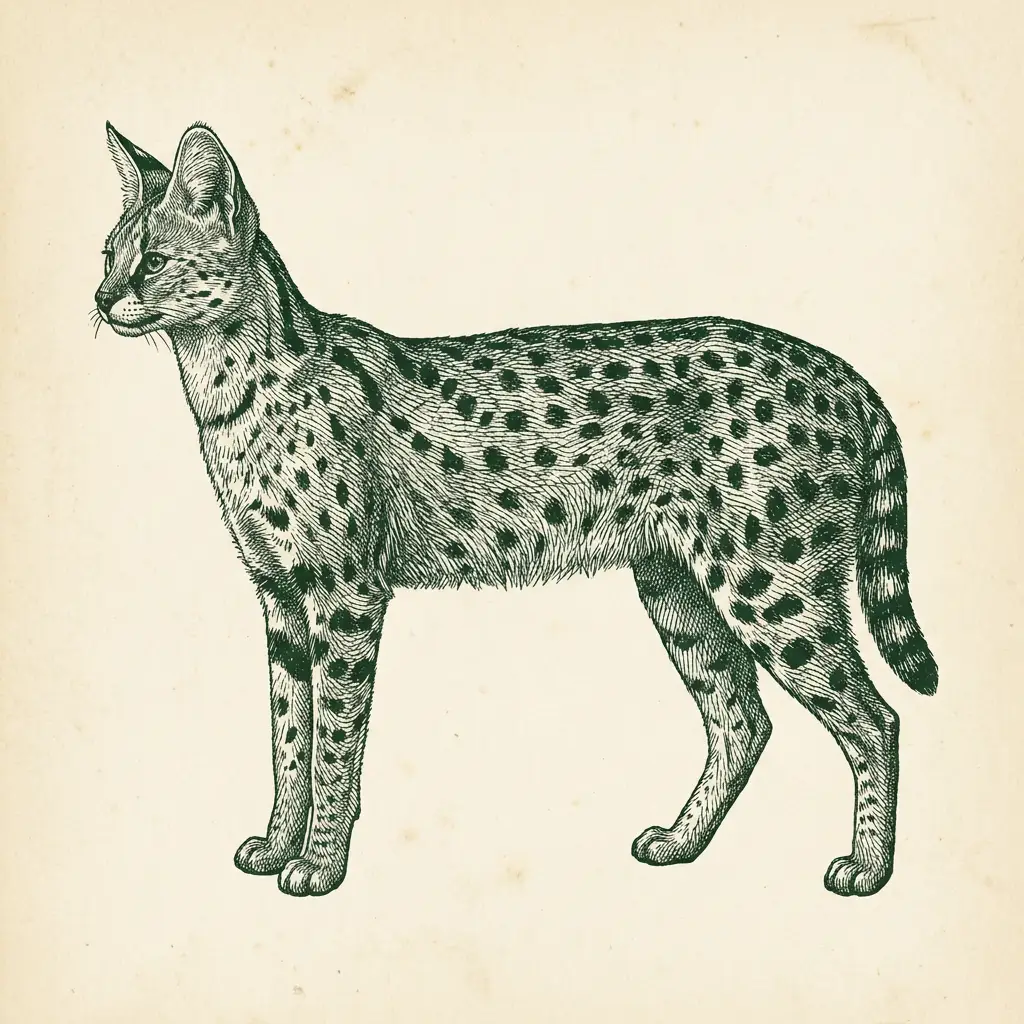
Is it legal to own a serval in Indiana?
The short answer
Yes, with a permit. Indiana's Class III covers dangerous wild animals including non-domestic cats — a Wild Animal Possession Permit with stronger caging and liability requirements than Class II. Indiana's reputation as an own-almost-anything state comes from exactly this: even big cats are permitted, not banned.
What Indiana law says
312 IAC 9-11-8 (Class III) covers listed dangerous species with enhanced enclosure, records, and inspection requirements. Confirm the serval's classification with DNR when applying — the class determines your caging standard.
Which agency regulates servals in Indiana
Indiana DNR, Division of Fish & Wildlife is the authority for serval (Leptailurus serval) possession in Indiana.
Is there a permit for pet servals?
Yes — the Wild Animal Possession Permit (Class III), issued by Indiana DNR, Division of Fish & Wildlife ($20/year (verify current fee)).
Penalties and enforcement
Unpermitted possession is a misdemeanor with confiscation.
Local city and county rules
Municipal exotic-cat bans apply in some cities.
Legal alternatives in Indiana
- Sugar Glider in Indiana — A palm-sized gliding marsupial, legal in most states but banned in a handful of cities and states.
Frequently asked questions
How hard is Indiana's Class III permit?
More demanding than Class II — enhanced caging, records, and inspection — but it's a genuine pathway Indiana actually grants, unlike most states' institutional-only permits.
Are Savannah cats Class III?
Domestic hybrids are generally outside the classes; confirm early-generation hybrids with DNR.
Sources
More animals in Indiana
- Is it legal to own a raccoon in Indiana?
- Is it legal to own a monkey in Indiana?
- Is it legal to own a fennec fox in Indiana?
See all animals on the exotic pet laws in Indiana page, or compare every state on the pet serval laws by state page.
Last verified 2026-07-03 against the cited primary sources. This is a research directory, not legal advice — confirm current rules with Indiana DNR, Division of Fish & Wildlife and your local animal-control authority before acquiring any animal.