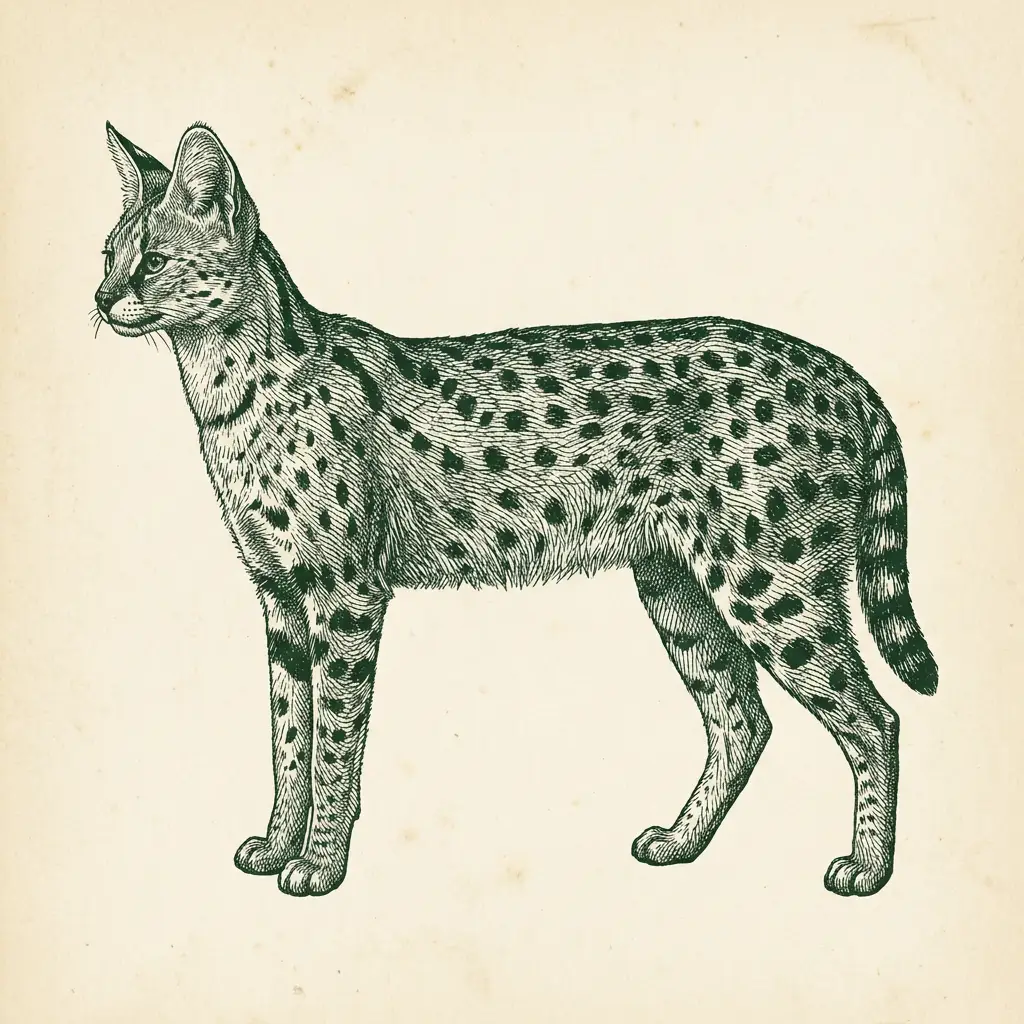
Is it legal to own a serval in Texas?
The short answer
Yes, with registration — in counties that allow it. Servals are on Texas's dangerous wild animal list (Health & Safety Code §822.101), so owning one requires a certificate of registration from your county or city animal registration agency, at least $100,000 in liability insurance, and compliance with state caging standards. Counties can — and some do — prohibit dangerous wild animals entirely.
What Texas law says
Health & Safety Code ch. 822, subchapter E names the serval explicitly among dangerous wild animals. Owners must register each animal with the local animal registration agency (typically county animal control or the sheriff), maintain liability insurance of at least $100,000 per occurrence, meet caging requirements set by the state, and allow inspections. Registration renews annually. The commissioners court of a county may prohibit or further regulate dangerous wild animals countywide (outside city limits), and cities may do the same inside theirs.
Which agency regulates servals in Texas
County/municipal animal registration agency (per Texas DSHS rules) is the authority for serval (Leptailurus serval) possession in Texas.
Is there a permit for pet servals?
Yes — the Dangerous Wild Animal Certificate of Registration, issued by County/municipal animal registration agency (per Texas DSHS rules) (Set by county; commonly $50–$500 per animal, annually). AZA/USDA-licensed exhibitors, research facilities, and sanctuaries follow separate rules.
Penalties and enforcement
Keeping an unregistered dangerous wild animal is a Class C misdemeanor plus civil penalties of $200–$2,000 per animal per day, and the animal may be seized.
Local city and county rules
Decisive here: many counties (e.g., Harris County has detailed regulations) restrict or prohibit dangerous wild animals, and most large cities ban them outright. Confirm with your county's animal registration agency before buying.
Legal alternatives in Texas
- Fennec Fox in Texas — The world's smallest fox — and one of the few foxes legal to own in several U.S. states.
- Sugar Glider in Texas — A palm-sized gliding marsupial, legal in most states but banned in a handful of cities and states.
Frequently asked questions
How do I register a serval in Texas?
Apply with your county's designated animal registration agency (often animal control or the sheriff), show proof of $100,000+ liability insurance, pass a caging inspection, and pay the county's registration fee. Renew annually.
Are Savannah cats treated like servals in Texas?
Hybrids of listed animals are covered by ch. 822's definition, so early-generation serval hybrids can fall under the same registration rules; later-generation Savannah cats are generally treated as domestic. Local ordinances vary.
Can my county just say no?
Yes. Commissioners courts may prohibit dangerous wild animals countywide, and city ordinances can ban them inside city limits — registration is only available where keeping them is allowed at all.
Sources
- Tex. Health & Safety Code §822.101 (serval listed)
- Texas DSHS — Dangerous wild animal registration
- Animal Legal & Historical Center — TX Subchapter E
More animals in Texas
- Is it legal to own a raccoon in Texas?
- Is it legal to own a monkey in Texas?
- Is it legal to own a fennec fox in Texas?
See all animals on the exotic pet laws in Texas page, or compare every state on the pet serval laws by state page.
Last verified 2026-07-02 against the cited primary sources. This is a research directory, not legal advice — confirm current rules with County/municipal animal registration agency (per Texas DSHS rules) and your local animal-control authority before acquiring any animal.