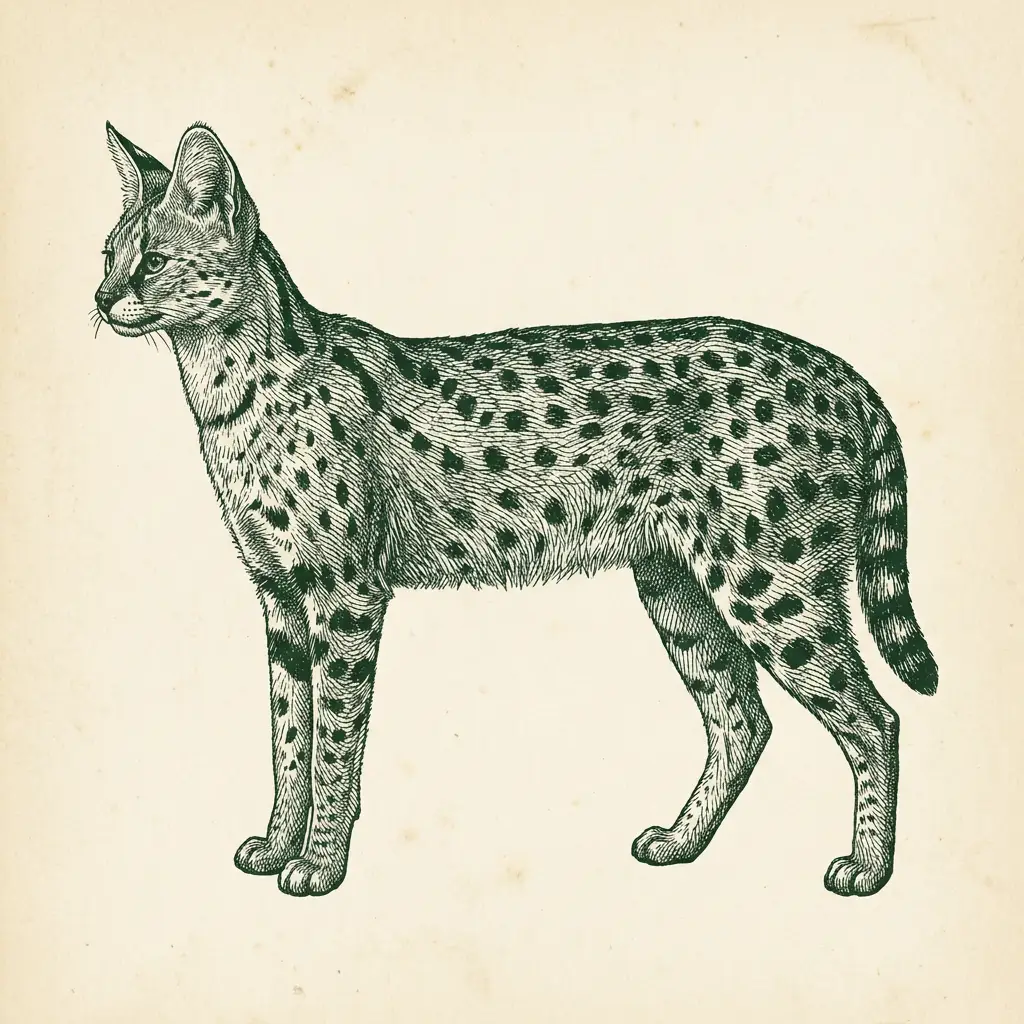
Is it legal to own a serval in North Carolina?
The short answer
Yes at the state level. North Carolina imposes no statewide restriction on servals — one reason it's a hub for exotic cat ownership. County and city ordinances are the controlling law, and several prohibit big or wild cats.
What North Carolina law says
With no statewide exotic statute, non-native cats like servals default to local control. Where counties are silent, ownership is lawful; where they regulate, requirements range from permits and insurance to outright bans.
Which agency regulates servals in North Carolina
North Carolina Wildlife Resources Commission (NCWRC) / county and city governments is the authority for serval (Leptailurus serval) possession in North Carolina.
Is there a permit for pet servals?
No permit is required at the state level. Research facilities, USDA exhibitors, and licensed rehabilitators under state permits.
Penalties and enforcement
State penalties apply to regulated native wildlife and unlawful imports; for non-native exotics, penalties come from county and city ordinances where they exist.
Local city and county rules
North Carolina has no statewide exotic pet statute — your county or city ordinance is effectively the law. An animal legal in one county can be criminal a few miles away.
Legal alternatives in North Carolina
- Sugar Glider in North Carolina — A palm-sized gliding marsupial, legal in most states but banned in a handful of cities and states.
Frequently asked questions
Is North Carolina really that permissive about exotic cats?
At the state level, yes — it's among the most permissive states in the country. But county ordinances are binding law, so check yours first.
What about escaped-animal liability?
Even without a permit scheme, owners face strict civil liability and potential criminal negligence exposure if a wild cat escapes or injures someone.
Sources
More animals in North Carolina
- Is it legal to own a raccoon in North Carolina?
- Is it legal to own a monkey in North Carolina?
- Is it legal to own a fennec fox in North Carolina?
See all animals on the exotic pet laws in North Carolina page, or compare every state on the pet serval laws by state page.
Last verified 2026-07-02 against the cited primary sources. This is a research directory, not legal advice — confirm current rules with North Carolina Wildlife Resources Commission (NCWRC) / county and city governments and your local animal-control authority before acquiring any animal.