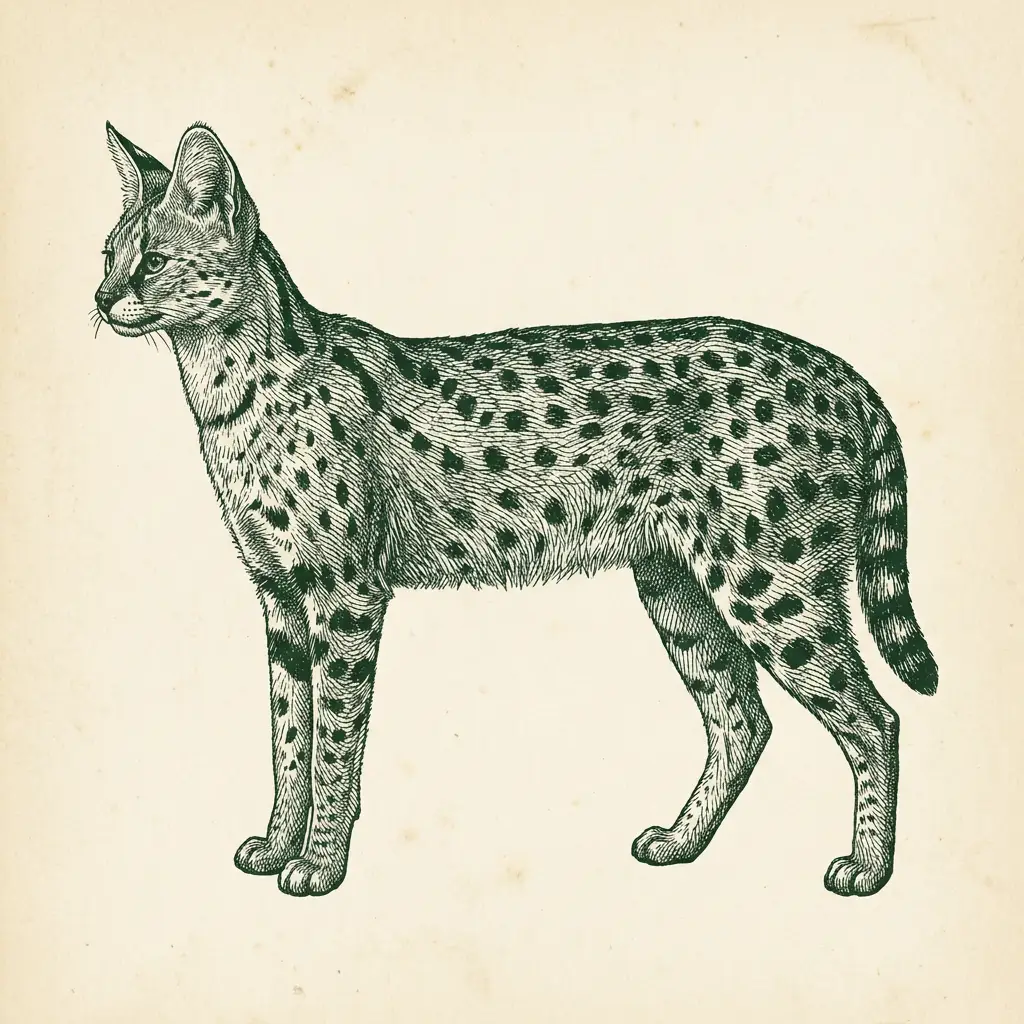
Is it legal to own a serval in Delaware?
The short answer
Yes, with a permit — in theory. Delaware's Dept. of Agriculture issues individual exotic-animal permits by class, and the serval, a non-native carnivore, falls under the Carnivore class rather than any outright ban. Expect a dual-enclosure inspection, and note that county 'dangerous animal' ordinances can prohibit large exotic cats locally.
What Delaware law says
Under 3 Del. C. §§7201–7203 and 3 Del. Admin. Code 903, non-native mammals need an individual Dept. of Agriculture permit; the serval isn't on the exempt list, so it requires a Carnivore-class permit with enclosure inspection.
Which agency regulates servals in Delaware
Delaware Dept. of Agriculture, Poultry & Animal Health is the authority for serval (Leptailurus serval) possession in Delaware.
Is there a permit for pet servals?
Yes — the Individual Exotic Animal Permit (Carnivore class), issued by Delaware Dept. of Agriculture, Poultry & Animal Health ($25 for 3 years). Zoos, exhibitors, and rehabilitators use separate permit classes.
Penalties and enforcement
Possession without a permit is punishable under 3 Del. C. §7203, with seizure possible.
Local city and county rules
Kent County bans felids as 'dangerous animals' and New Castle County restricts wild animals; local rules can defeat a state permit.
Legal alternatives in Delaware
- Fennec Fox in Delaware — The world's smallest fox — and one of the few foxes legal to own in several U.S. states.
- Sugar Glider in Delaware — A palm-sized gliding marsupial, legal in most states but banned in a handful of cities and states.
Frequently asked questions
Can I actually permit a pet serval in Delaware?
Statewide the Carnivore permit class exists, but county ordinances (e.g., Kent) may prohibit felids where you live.
What's required for the permit?
A $25 three-year permit plus a home inspection of primary and secondary enclosures and an owner-knowledge check.
Sources
More animals in Delaware
- Is it legal to own a raccoon in Delaware?
- Is it legal to own a monkey in Delaware?
- Is it legal to own a fennec fox in Delaware?
See all animals on the exotic pet laws in Delaware page, or compare every state on the pet serval laws by state page.
Last verified 2026-07-03 against the cited primary sources. This is a research directory, not legal advice — confirm current rules with Delaware Dept. of Agriculture, Poultry & Animal Health and your local animal-control authority before acquiring any animal.